Our website uses cookies
Our website uses cookies. By continuing, we assume your permission to deploy cookies as detailed in our Privacy Policy.


The credit union does not represent either the third party or the member if the two enter into a transaction.

Budgeting gets a bad rap; it sounds like boring spreadsheets and late-night math. But really, a budget is just a plan for your money. It helps you stress less, crush debt, and save for the things you actually care about.
While you can use budgeting apps or GreenPath’s budgeting worksheets to help expedite the process, it’s important to know how to manage your money manually. Whether you’re prepping a budget to use now or you’re practicing how to manage your expenses for the future, the process is super simple!
Here’s how to build a budget in 5 steps.
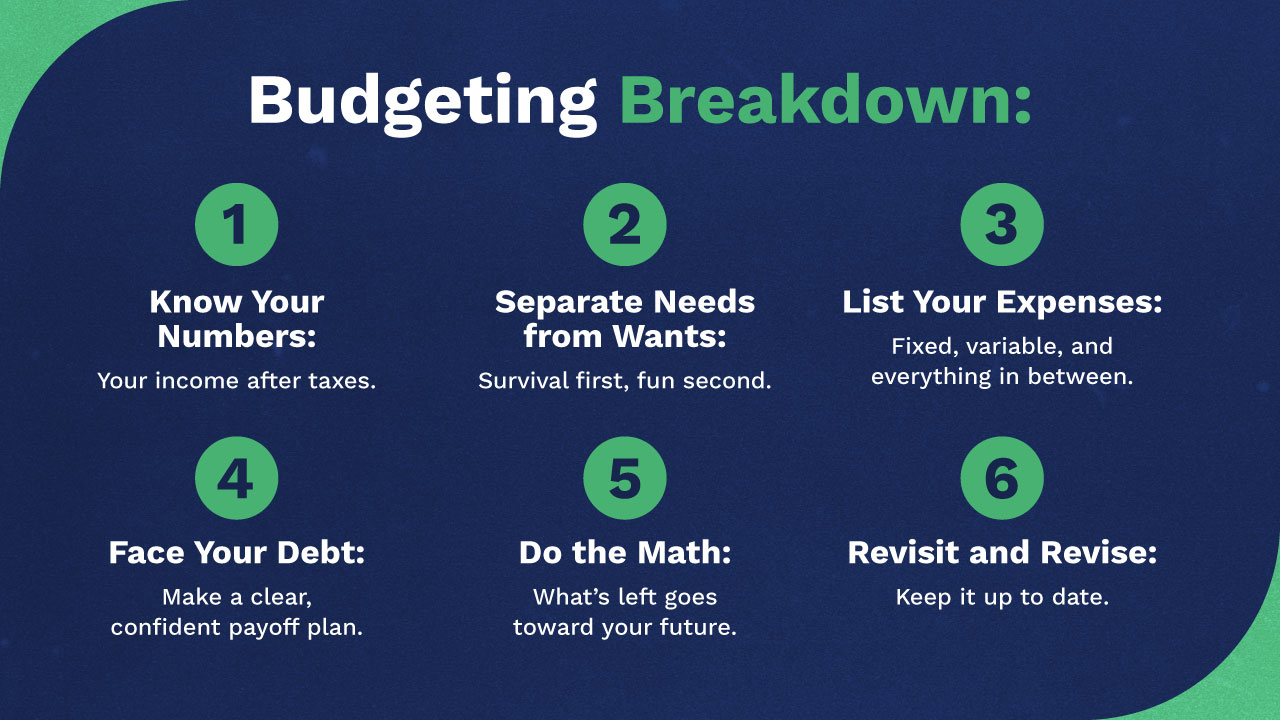
Start with your net income— that’s the money you take home after taxes. This is your baseline. You can’t spend money you don’t have.
Pro Tip: If your income changes each month, use your lowest month as your guide. It’s always smart to plan for the “what if.”
Don’t have a current income? Do some research into jobs you’re interested in working while going to school, or careers you plan to start after you graduate. Practice making a budget with those numbers, so when the time comes, you’re prepared!
Think desert island rules.
Needs = food, rent, transportation, basic essentials.
Wants = takeout, subscriptions, new clothes, gaming upgrades.
Wants aren’t bad; they just come after your needs. When you know the difference, you’re in control of your choices.
Now get specific. Break your spending into three groups:
Fixed Expenses (same every month)
Variable Expenses (change month to month)
Other Expenses (the sneaky stuff)
Be honest. The clearer the picture, the easier it is to adjust.
Pro Tip: Look back over the past few months of purchases to find your average spending
List everything you owe— credit cards, student loans, payment plans, money you borrowed from family.
If you’re practicing budgeting for the future, think about situations that might cause you to incur debt. These may include college tuition and other educational expenses, credit card charges, concert tickets your friend bought that you need to pay back, or Buy Now, Pay Later services. Try to be as realistic as possible, so you’re better prepared for the future.
Next, choose a strategy:
Remember to be patient. Paying off debt takes time, but every payment moves you forward.
Take your monthly income and subtract your expenses (including debt payments). What’s left? That’s your savings superpower. Saving just $20 a month adds up!
Even if you’re practicing budgeting for the future, you can start building your savings now. Take a portion of your allowance, birthday money, or holiday spending cash that you don’t use and put it aside for emergencies, gifts, and future goals.
Pro Tip: Set up automatic transfers to your savings account. Simple. Easy. Stress-free.
Remember, your budget isn’t fixed; revisiting and revising it helps you stay aligned with your changing goals and circumstances. Because when you understand your money, you make smarter decisions. And at EdiFi, we believe when you know more, you grow more.